Table of Contents
1. Introduction: Can You Really Build Muscle on a Vegetarian Diet?
Think you need meat to build muscle? Think again.
One of the biggest myths floating around is that vegetarians can’t gain serious muscle because they don’t eat meat. But the truth is—you absolutely can build strong, lean muscle on a vegetarian diet. All it takes is the right foods, in the right amounts, and a little planning.
In fact, many athletes and bodybuilders are switching to plant-based diets to feel healthier, recover faster, and stay leaner. Some of the strongest people in the world—yes, even bodybuilders and powerlifters—are thriving on meat-free diets.
This article is your go-to guide for building muscle while sticking to a vegetarian lifestyle. We’ll walk through how muscle grows, what your body needs (spoiler: protein is king), and exactly what to eat each day to get bigger, stronger, and healthier—without touching meat.
2. Muscle Growth 101: How Muscles Form, Tear & Recover
Before we dive into foods, let’s talk muscle science—don’t worry, we’ll keep it simple.
When you lift weights or do any resistance training, you’re causing small tears in your muscle fibers. That’s totally normal. In fact, that’s exactly what you want. Your body responds by healing those tears, and during that process, it builds your muscles back slightly thicker and stronger.
This process is called muscle hypertrophy, and it’s the key to gaining muscle.
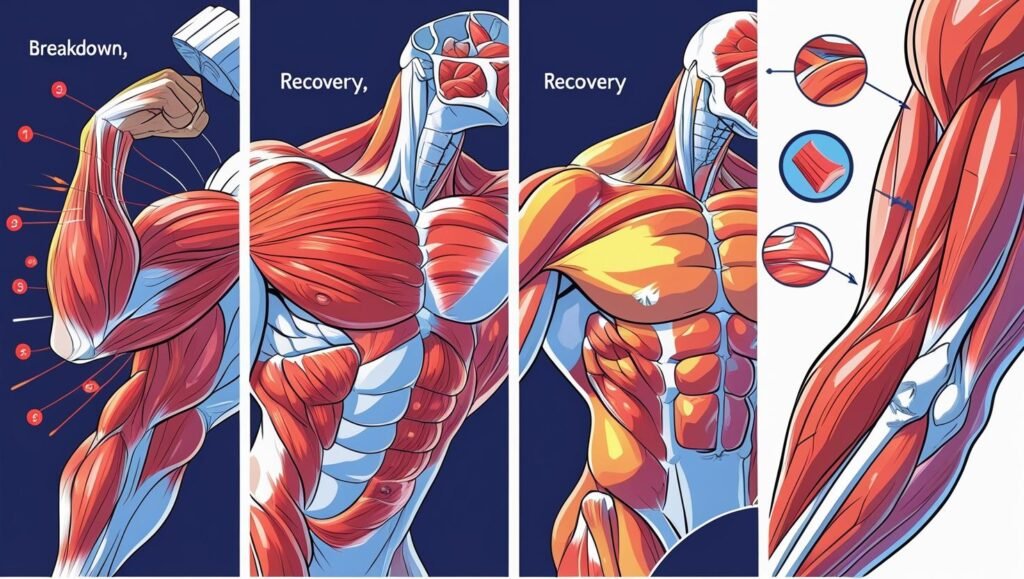
Here’s what your body needs to grow:
Nutrition: Especially protein, calories, and key nutrients.
Training: Progressive overload (lifting heavier or doing more reps over time).
Recovery: Sleep, rest days, and stress management.
If you’re not eating enough—especially protein—your body won’t repair and build new muscle tissue. So even if you train hard, you won’t see results unless your diet supports recovery and growth.
Bottom line? No recovery = no gains. And recovery starts in the kitchen.
3. Why Protein is Essential for Building Muscle
Let’s get one thing straight: protein is the #1 nutrient for muscle building.
Think of your muscles like a brick wall. After every workout, your body is trying to rebuild that wall stronger—but to do that, it needs bricks. Those bricks are amino acids, and you get them from protein.
Here’s how protein helps:
- Repairs damaged muscle tissue after workouts.
- Builds new muscle fibers.
- Supports strength, stamina, and recovery.
How much protein do you need?
For muscle gain, you need about 1.6 to 2.2 grams of protein per kilogram of body weight per day. So, if you weigh 70kg, that’s around 112g to 154g of protein every day.
When should you eat it?
- Spread protein across 4–5 meals/snacks per day.
- Get 20–30g of protein per meal.
- Eat protein-rich foods within 30–60 minutes post-workout.
Don’t worry if that sounds like a lot—we’ll show you some high-protein vegetarian foods next that make hitting your daily goal easy.
4. Complete vs. Incomplete Proteins: What’s the Difference?
Now, here’s a key concept in vegetarian nutrition: complete vs. incomplete proteins.
What are complete proteins?
Complete proteins contain all nine essential amino acids your body needs but can’t make on its own. Most animal-based foods are complete proteins, but some plant-based ones are too.
What are incomplete proteins?
Incomplete proteins are missing one or more essential amino acids. Most plant-based proteins fall into this category, but that doesn’t mean they’re not useful.
Here’s the trick: you can combine incomplete proteins to make a complete one. For example, eating rice with beans gives you all the amino acids you need.
📝 Comparison Table: Complete vs. Incomplete Proteins (Vegetarian)
| Protein Source | Type | Complete? | Protein per 100g | Good For? |
|---|---|---|---|---|
| Eggs | Animal | ✅ Yes | ~13g | All vegetarians (if included) |
| Greek Yogurt | Animal | ✅ Yes | ~10g | Lacto-vegetarians |
| Tofu | Plant | ✅ Yes | ~8g | All vegetarians |
| Tempeh | Plant | ✅ Yes | ~19g | High-protein meals |
| Lentils | Plant | ❌ No | ~9g | Combine with rice/quinoa |
| Chickpeas | Plant | ❌ No | ~8.9g | Combine with whole grains |
| Brown Rice | Plant | ❌ No | ~2.7g | Combine with legumes |
| Quinoa | Plant | ✅ Yes | ~4.4g | Great carb + protein combo |
| Almonds | Plant | ❌ No | ~21g | Combine with seeds/grains |
| Pumpkin Seeds | Plant | ❌ No | ~19g | Great protein snack |
For Lactose Intolerant?
- Skip dairy and go for soy, tempeh, legumes, quinoa, and pea protein powders.
5. Best High-Protein Vegetarian Foods for Muscle Gain
Alright, let’s get into the good stuff—the best vegetarian foods that are packed with protein. These options are ideal for muscle gain and are easy to mix into your meals.
🧾 Comparison Table: High-Protein Vegetarian Foods (Per 100g)
| Food Item | Calories | Protein (g) | Notes |
|---|---|---|---|
| Tofu | 144 | 8 | Great for stir-fries, curries |
| Tempeh | 193 | 19 | Dense, nutty texture |
| Lentils (cooked) | 116 | 9 | Use in soups, salads |
| Chickpeas (cooked) | 164 | 8.9 | Great in hummus, curries |
| Quinoa (cooked) | 120 | 4.4 | A complete protein grain |
| Greek Yogurt | 59 | 10 | Choose plain, low-fat |
| Cottage Cheese | 98 | 11 | High in casein, good at night |
| Peanuts | 567 | 25.8 | Calorie-dense, good snack |
| Almonds | 579 | 21 | Rich in healthy fats too |
| Pumpkin Seeds | 559 | 19 | Easy to sprinkle on salads |
| Edamame | 121 | 11 | Steamed or in rice bowls |
| Pea Protein Powder | ~100 | ~20–25 | Ideal for shakes & smoothies |
Pro Tip:
To hit your protein goals, mix these sources throughout the day. Add tempeh to lunch, yogurt to breakfast, and a pea protein shake post-workout.
Continuing the article with the next sections:
6. Carbs, Fats, Fiber & Protein: Building Blocks of a Veg Muscle Diet
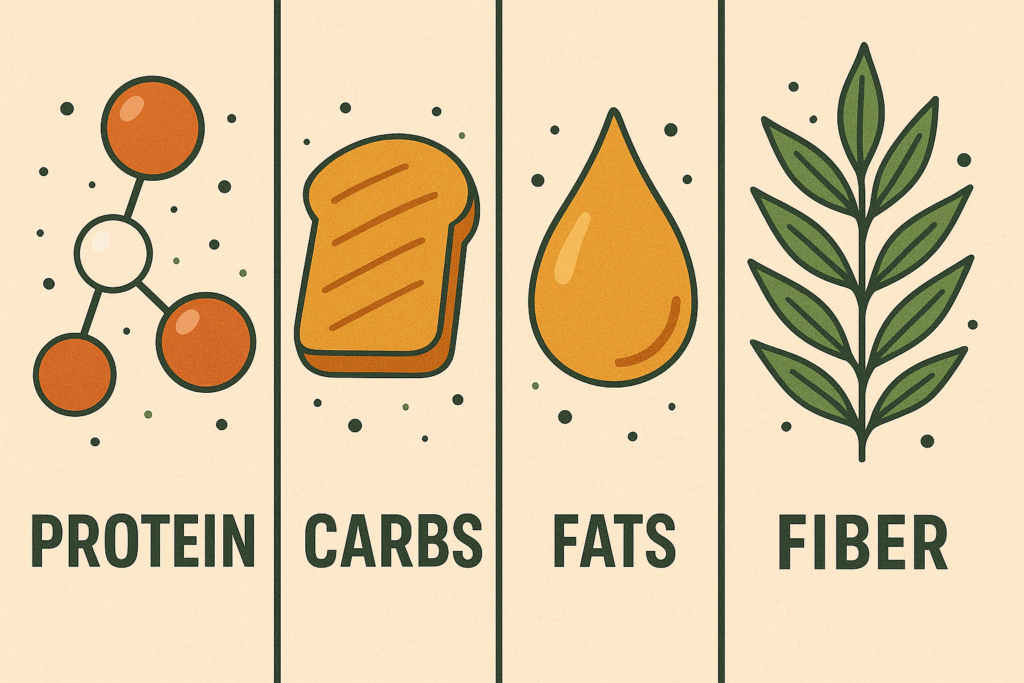
Protein may be the star when it comes to muscle gain, but you can’t ignore the supporting cast—carbohydrates, fats, fiber, and calories. Each plays a specific role in helping you fuel your workouts, recover, and build new muscle.
Let’s break them down.
Carbohydrates: Your Body’s Primary Fuel
Carbs are not the enemy—they’re your main energy source, especially during workouts. When you eat carbs, your body turns them into glycogen, which is stored in your muscles and used for fuel. Without enough carbs, you may feel tired, weak, and struggle to complete intense training sessions.
Best sources:
- Brown rice, oats, quinoa
- Sweet potatoes, whole wheat bread
- Fruits like bananas, apples, berries
Fats: Essential for Hormone Balance
Healthy fats support testosterone production, which is crucial for muscle development. They also help absorb fat-soluble vitamins like A, D, E, and K—important for recovery and overall health.
Best sources:
- Nuts and seeds
- Avocados
- Olive oil and flaxseed oil
Fibre: Supports Digestion and Nutrient Absorption
While fibre doesn’t directly build muscle, it helps you absorb nutrients efficiently and keeps your digestive system in check. A healthy gut equals better nutrient absorption.
Best sources:
- Vegetables (broccoli, spinach, kale)
- Fruits (apples, pears)
- Legumes and whole grains
Calories: Eat More to Grow More
To gain muscle, you need to eat in a calorie surplus—meaning you consume more calories than you burn. Without enough calories, even a high-protein diet won’t be effective.
📊 Macronutrient Role Table for Vegetarian Muscle Building
| Nutrient | Role in Muscle Building | Best Vegetarian Sources |
|---|---|---|
| Protein | Builds & repairs muscle fibers | Tofu, tempeh, lentils, Greek yogurt, eggs |
| Carbs | Fuels workouts & restores glycogen | Oats, rice, fruits, starchy veggies |
| Fats | Supports hormones & nutrient absorption | Nuts, seeds, avocados, plant oils |
| Fibre | Aids digestion & nutrient uptake | Whole grains, legumes, veggies |
| Calories | Provides energy surplus for muscle gain | Combination of all above |
Tip: Use apps like MyFitnessPal to track your calorie and macronutrient intake. This ensures you stay on target.
7. How to Plan a Balanced Vegetarian Meal for Muscle Growth
So, how do you turn this knowledge into a real plate of food? It’s easier than you think. A perfectly balanced vegetarian meal for muscle gain follows this simple rule:
1/3 Protein + 1/3 Carbs + 1/3 Veggies/Fats
Let’s build a plate step-by-step.
Step 1: Add a High-Protein Source
Pick a food that gives you 20–30g of protein:
- 1 cup cooked lentils + quinoa
- 100g tempeh or tofu oe paneer
- 1 scoop pea protein + almond milk smoothie
Step 2: Add Complex Carbs
Carbs help restore energy and improve protein absorption:
- 1 cup brown rice or oats
- 2 slices whole grain bread
- 1 large sweet potato
Step 3: Add Colorful Veggies + Healthy Fats
These give vitamins, minerals, and digestion support:
- A handful of spinach, tomatoes, bell peppers
- 1 tbsp olive oil or flaxseed on top
- ¼ avocado or some seeds sprinkled in
Sample Muscle-Gain Vegetarian Meal Ideas
| Meal | Ingredients | Protein (Approx) |
|---|---|---|
| Breakfast | Oats with peanut butter, banana, chia seeds, and pea protein shake | 30g |
| Lunch | Brown rice, tofu stir-fry with broccoli, peppers, and sesame oil | 35g |
| Dinner | Quinoa, lentil curry, spinach, and avocado salad | 32g |
| Snack | Greek yogurt with almonds or protein bar | 20g |
| Post-Workout | Protein shake (pea protein + almond milk + banana) | 25g |
Tip: Cook in bulk and prep meals ahead to avoid skipping meals or grabbing low-protein options.
8. Sample Vegetarian Diet Plan to Build Muscle (For All Levels)
Let’s bring it all together with a real vegetarian meal plan. This plan hits around 2,500 calories and 120–140g of protein, making it ideal for muscle gain.
🗓️ Full-Day Vegetarian Muscle Gain Diet Plan
| Time | Meal | Items |
|---|---|---|
| 7:30 AM | Breakfast | Oatmeal with 1 tbsp peanut butter, banana, chia seeds, almond milk + 1 scoop pea protein |
| 10:00 AM | Snack | Greek yogurt with almonds and 1 apple |
| 1:00 PM | Lunch | Brown rice + tofu stir-fry (broccoli, bell peppers, soy sauce) + salad with olive oil |
| 4:30 PM | Pre-Workout Snack | Whole grain toast with hummus and a handful of pumpkin seeds |
| 6:30 PM | Post-Workout Shake | Pea protein, almond milk, frozen berries, oats |
| 8:00 PM | Dinner | Quinoa + lentil dal + sautéed spinach and carrots + avocado slices |
| 10:00 PM | Optional Snack (if hungry) | Cottage cheese or soy yogurt with walnuts |
This plan balances protein, healthy carbs, fats, and fibre across the day to optimize both energy and muscle recovery.
9. Final Words: Stick With It, and Your Gains Will Come
Building muscle on a vegetarian diet isn’t just possible—it’s powerful. With the right knowledge, proper meal planning, and a bit of consistency, you’ll not only gain muscle, but also boost your overall health and energy levels.
Stick to whole, protein-rich foods. Track your intake if needed. Get enough rest. Train smart. And remember: it’s a journey. Muscle doesn’t grow overnight, but with plants as your fuel, you’re well on your way.
FAQs
1. Can I build muscle without eating eggs or dairy?
Yes! You can rely on soy products, legumes, quinoa, and plant-based protein powders.
2. What are the best veg post-workout snacks?
Protein shake with pea or soy protein, a peanut butter banana smoothie, or Greek yogurt with fruit.
3. Should I use protein supplements on a vegetarian diet?
They help meet your protein goals but aren’t mandatory if you eat enough whole foods.
4. How soon will I see results on a veg muscle diet?
With consistent training and eating, expect noticeable results in 8–12 weeks.
5. How to avoid bloating on a high-protein vegetarian plan?
Start slow with legumes, drink plenty of water, and chew food well. Try soaking beans before cooking.
Please don’t forget to leave a review.